
In recent years, the Internet of Things (IoT) has been predicted to transform various aspects of our lives, from
how we work to how we play and everything in between. IoT enables us to do things faster, easier, and more efficiently than ever before, by connecting virtually any device with an on/off switch to the internet. But where does this leave the developing world?
Especially as developing countries start making their way towards digitization, what is the best way forward?
What is the Internet of Things?

The Internet of Things, or IoT, is a system of interconnected devices and sensors that collect and share data.
By connecting devices and sensors to the internet, we can make our homes and businesses smarter and more efficient.
Connected devices are everywhere – from smart lights to refrigerators that know when you’re low on milk and eggs -making it easier for people to live their lives without worry. But how does this work for developing countries?
What are use cases so far?

The internet of things (IoT) is still in its early stages, but there are already a number of use cases for it in
the developing world. One example is using IoT sensors to monitor crop conditions and soil moisture levels, which can help farmers increase yields and reduce water usage. Another potential use case is using IoT-enabled trash cans to track waste levels in cities, which can help municipalities better manage the waste collection.
How can we make it happen?
One way to make the internet of things a reality in the developing world is by outfitting homes with smart technology, no matter how crude in the beginning. This will encourage incremental improvement in the know-how.
This would include appliances that can be controlled remotely, energy-efficient light bulbs, and security systems. With smart homes, families would be able to save money on their utility bills and have peace of mind when it comes to their safety. A family could set up cameras inside and outside of their home which are monitored 24/7 from anywhere in the world. If an intruder were detected, these cameras could send an alert notifying family members or authorities who could then take action.

Solar power is becoming ubiquitous now in the country as the cost of solar installation keeps dropping. The use of IoT in monitoring key system parameters like load and battery level can prolong the life of the batteries and prevent unexpected blackouts.
A smart home also has other benefits as well such as allowing for remote control of lights and appliances through mobile devices, energy efficiency through smart switches which turn off electronics automatically when they’re not being used, intelligent thermostats which optimize temperature settings based on weather conditions or time periods, etc.
Smart homes may seem like a luxurious endeavor for those living in poverty-stricken countries but this isn’t necessarily true.
Where are we now as IoT enthusiasts or developers in Nigeria?
Every IoT system or device, no matter how small or big needs a way to communicate with the cloud server to send sensor data and receive information to activate or deactivate actuators. This central server enables us to get access to the data sent from the connected device and send commands to the connected device using our computer or smartphone with an internet connection.
The server can also perform several data analyses on the data received based on the application’s needs.
As an IoT experimentalist or enthusiast, there is loT of cloud option to choose from for our IoT projects. The majority are paid versions with a limited option for free use. One major disadvantage we discovered in the all cloud service we have used is that: they are difficult to customize for the end user use.
The attempt.

At ifelectric, we make an attempt to develop an IoT cloud that can be easily customizable for end users, hosting it on a shared hosting service.
Its hosted at device.ifelectric.com. You can register to start using it and experimenting with your IoT projects.
This is still at the experimental stage, but you can use it to test your idea or product.


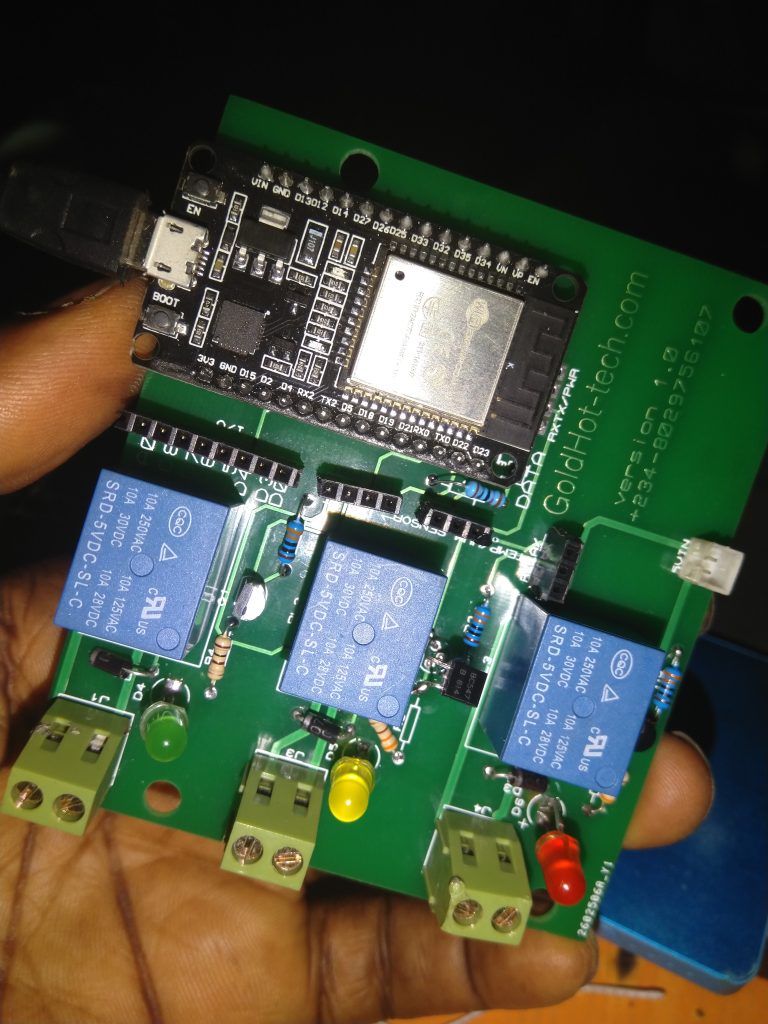
We build a custom relay board with three relays, DHT temperature, and humidity sensor with an esp32 controller. Any microcontroller with wifi that can access the internet can be used, be it raspberry pi,esp8266, and the likes.
We used Arduino IDE for the controller coding, any IDE of your choice can be used.
You are free to register and use for your client as an IoT device developer or experimental.
The API is very simple. Just sent a JSON message in the following order;
UserID,Authentication key,Value_1,Value_2,Value_3 to this url:device.ifelectric.com/process_request.php.
UserID and Authentication key, you get from registration. Value_1, Value_2, and Value_3 are any results from the code in the microcontroller application.
You received a response from the server if everything is ok,102130.
which means switch 1 is off(0),switch 2 is on(1) and switch 3 is off(0).
Email:suledsui@yahoo.com for more details and how you can experiment with it for your IoT solutions.